
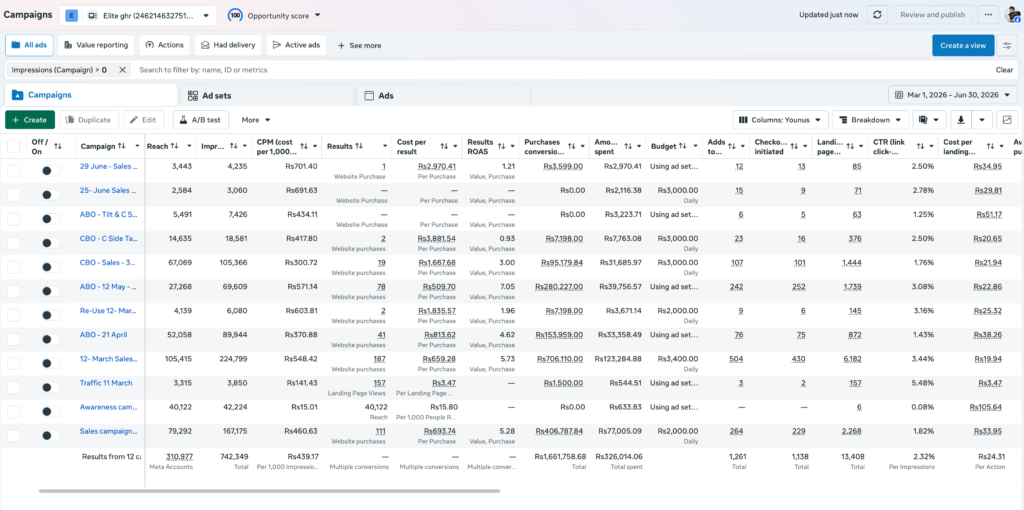
Generated 552+ Website Purchases with a 5.1X ROAS for a Shopify Furniture Brand
Generated 552+ Website Purchases with a 5.1X ROAS for a Shopify Furniture Brand Successful Meta Ads for eCommerce isn’t just about launching campaigns and waiting for sales. It starts with building the right foundation, tracking every important customer action, and continuously optimizing campaigns based on real purchase data. I partnered with a Shopify furniture eCommerce brand to build its Meta Ads ecosystem from the ground up, with one clear objective: generate consistent online sales while maintaining a profitable Return on Ad Spend (ROAS). The Challenge The brand needed more than simply running Facebook and Instagram ads. A complete advertising and tracking foundation had to be established before campaigns could be effectively scaled. The key challenges included: Building the Meta advertising infrastructure from the ground up Setting up reliable purchase tracking and conversion measurement Creating a sales-focused funnel for the Shopify store Generating consistent purchases from paid traffic Finding profitable campaign and creative combinations Scaling sales while maintaining a healthy ROAS The objective was to create a complete, measurable Meta Ads system that could turn paid traffic into profitable Shopify purchases while providing a foundation for continued growth. The Strategy To build a scalable advertising system, I focused on the complete customer journey—from technical setup and tracking to campaign optimization and scaling. Complete Meta Ads Foundation I created and structured the Facebook Business Manager environment, connected the required assets, and established the Facebook and Instagram presence needed to support the advertising system. Conversion Tracking & Meta Pixel The Meta Pixel was installed and configured with purchase tracking so campaign performance could be measured against actual Shopify sales rather than relying only on traffic or engagement metrics. High-Converting Landing Page A sales-focused landing page was designed to provide paid traffic with a clear path toward product discovery and purchase, helping connect the advertising message with the Shopify buying experience. Sales-Focused Campaign Structure Meta Ads campaigns were launched with a focus on website purchases. Different campaign structures and promotional angles were tested to identify where the strongest purchase performance came from. Creative & Campaign Testing Different ad creatives, offers, campaign approaches, and messaging angles were continuously tested. Performance data was used to identify stronger combinations and reduce inefficient spending. Audience & Performance Optimization Campaigns were optimized around purchase volume, cost per purchase, ROAS, landing page activity, add-to-cart volume, and checkout initiations. Stronger campaigns were given more opportunity to scale. Controlled Scaling Budgets were increased around campaigns that demonstrated profitable purchase performance. This allowed sales volume to grow without treating every campaign equally or sacrificing efficiency. Full-Funnel Integration: By combining technical setup, conversion tracking, funnel optimization, creative testing, and disciplined campaign management, Meta Ads became a measurable and scalable sales channel for the Shopify furniture brand. Results The campaigns delivered strong results during the approximately 120-day reporting period: 552+ Website Purchases Rs. 1.66M+ Attributed Purchase Revenue 5.1X Average ROAS Rs. 326K+ Total Ad Spend 13K+ Landing Page Views 1,261 Add-to-Carts 1,138 Checkouts Initiated These results demonstrate that the campaign generated significant purchase volume while maintaining a profitable return on advertising spend. The performance was driven by the combination of a properly configured tracking system, a conversion-focused funnel, continuous testing, and performance-based optimization. Performance Over Time & Reports Rather than highlighting only one successful campaign, the reporting period covers approximately 120 days of Meta Ads activity from March through June 2026. The combined March–June 2026 report demonstrates how different sales campaigns, retargeting/re-use campaigns, and promotional periods contributed to the overall account performance. Performance Highlight March to June 2026 Complete Overview (552 Website Purchases | Rs. 1.66M+ Purchase Revenue | 5.1X ROAS) 📅 Monthly Breakdown Reports June 2026 Campaign Report May 2026 Campaign Report April 2026 Campaign Report March 2026 Campaign Report June 2026 Campaign Report May 2026 Campaign Report April 2026 Campaign Report March 2026 Campaign Report Key Takeaways This case study demonstrates that strong eCommerce advertising starts with the right foundation and improves through continuous optimization. The key principles behind the results were: Build the tracking foundation before scaling Optimize for purchases and business outcomes Test creatives, offers, and campaign structures continuously Use real conversion data instead of assumptions Scale campaigns based on profitable performance Connect the advertising funnel with the Shopify customer journey By combining technical setup, conversion tracking, funnel optimization, creative testing, and disciplined campaign management, Meta Ads became a measurable and scalable sales channel for the Shopify furniture brand. Ready to Scale Your Facebook Ads? Whether you’re launching a Shopify store, struggling to generate consistent purchases, or looking to scale an existing eCommerce campaign, we can help build a Meta Ads system focused on measurable sales and profitable growth. Get Free Consultation